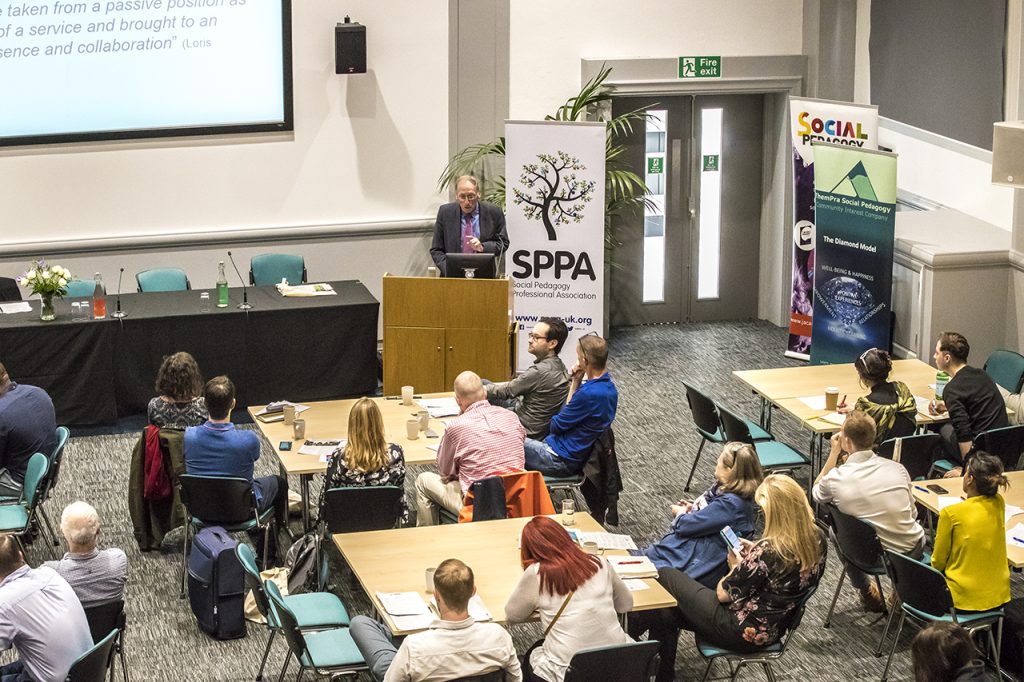
The Social Pedagogy Professional Association’s inaugural Conference took place on Friday 6th October 2017 at Woburn House in London. It was a day filled with a series of workshops, networking and a chance for new members and non-members to get together and engage in how social pedagogy can be more prominent in the UK with members and non-members support, and how SPPA can help support that.
It was attended by 75 members and non-members alike, from different sectors around the UK, all intrigued by making connections with social pedagogy and charting a way forward for social pedagogically informed policy and practice in the UK. It was also an opportunity to reflect on the growth of SPPA since the launch in February 2017 and how much it has developed not only as a membership organisation but in also supporting the piloting of the Level 3 and 5 Diploma qualifications, as well as promoting interest and demand for social pedagogy in the UK to provide better care to children, young people, adults and older people across all sectors.
Social Pedagogy and school-based education – distant relatives or close family?
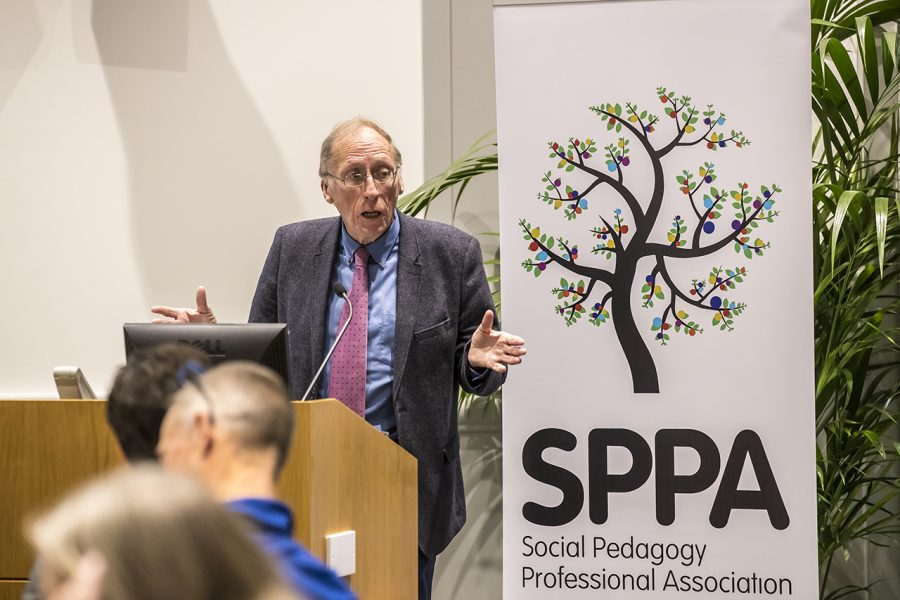
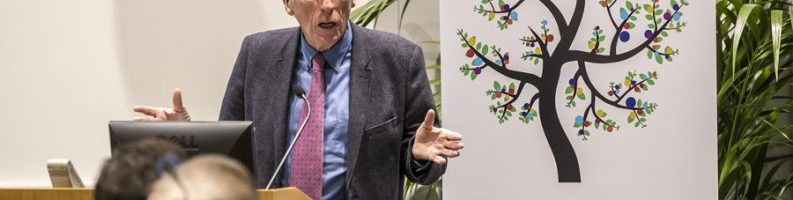
Professor Peter Moss started the day, by delivering a keynote talk on how ‘education in its broadest sense’ has much in common with the principles and practices of Social Pedagogy as understood by SPPA and expressed in our Charter. He talked about how school-based education (SBE) in England today is nearer the ‘education in its narrowest sense’ end of the continuum, as a distant relative of Social Pedagogy. Referencing the Reggio Emilia approach (in Northern Italy) and how municipal schools for young children that use experiential learning methods in relationship driven environments have benefited children and young people. He argued that we should be using the same example in the UK by using progressive education in which ‘school-based education’ is near to the ‘education in its broadest sense (EBS)’ end of the spectrum, as close family. He concluded by urging Social Pedagogy to provoke debate about the meaning of education and the image of the school.
SPPA Poster Competition
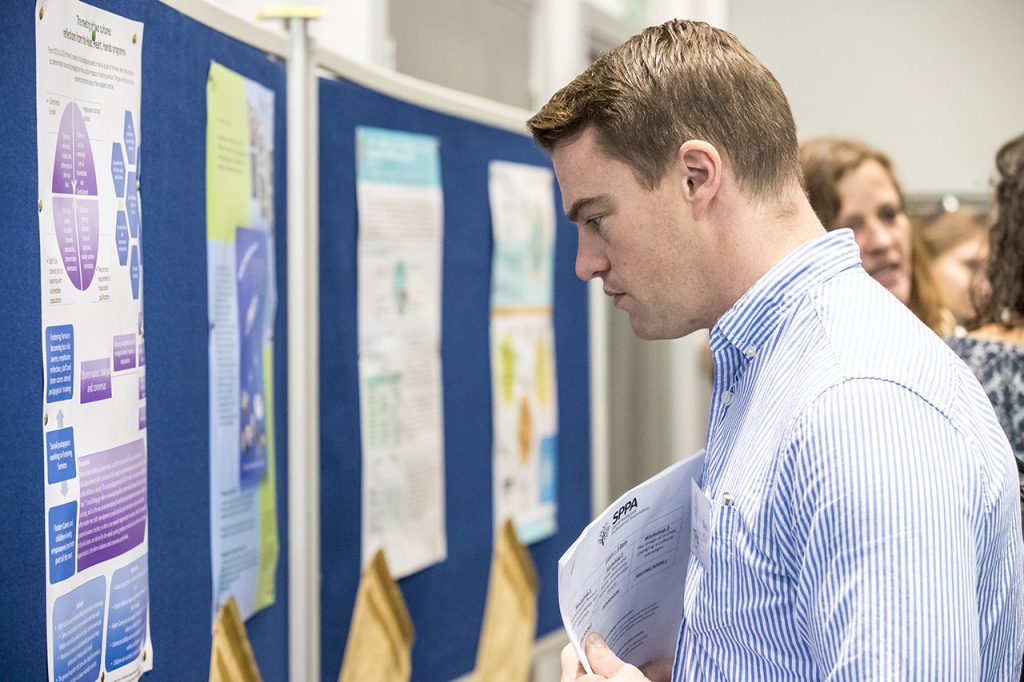
The SPPA Conference also saw a Poster Competition held, sponsored by the International Journal of Social Pedagogy and UCL Press based on the theme, ‘Education in its broadest sense‘. We had an excellent variety of submissions that were available to view by our attendees throughout the day and were able to provide input and comments on each poster displayed. The winner of the competition was later announced. Poster submissions are:
The image of the rich child in social pedagogy
by Cecile Remy
The poster will outline the methodology suggested to answer the following research question: “How the image of the rich child is influencing the work of social pedagogues?”. The poster will be a visual representation of the principle of ascending from the abstract to the concrete, used by Freire and Engestrom as a key principle to their definition of learning.
Social Pedagogy as the foundation of a new socio-educational profession – Social Educator
by Maria Fátima Barros Correia
Social Education has recently emerged as a profession in Portugal. This work intends to describe the role these professionals play in developing society and how it finds its theoretical framework in Social Pedagogy. Social Education is a social work imbued with a pedagogical character (educational dimension in society) and educational work carried out in the context of social action (socializing dimension of education). Social pedagogy is the “science of social education” because it is a field of knowledge that integrates, in an interdisciplinary way, different knowledge and produces methodological and theoretical models oriented to a reflection of social and cultural problems. Education constitutes a tool of social participation and socio-educational action and, consequently, of community development. Thus, Social Pedagogy seeks to respond to the potential of society as a factor of social development.
To better connect ethos, learning and practice we constantly ask ourselves ‘Why do we do what we do?’ and ‘How can we do it better?’ We offer a variety of platforms to access to inspire curiosity, including online courses, curation, academic modules, taught and experiential learning. We would like to share how social pedagogy can be the thread which connects our strength based learning and practice and how we value being connected to a wider network including ThemPra, SPDN, SPPA, Strathclyde university etc. to support us.
The meeting of two cultures: reflections from the Head, Heart, Hands programme
by Simon Johr and Veronica Eva Perez
From 2012 to 2015 social pedagogues from different parts of Europe worked in the United Kingdom as part of the Head, Heart, Hands programme (HHH). The programme aimed to demonstrate how introducing social pedagogy into foster care could have a positive impact on fostering services. At the end of the programme the thirteen social pedagogues reflected on their experience. The group decided to capture their learnings in writing for a wider audience, with the aim of identifying areas of improvement and reinforcing current practices for enhancing the quality of care in the UK, and ultimately to contribute to the understanding of how social pedagogy could be integrated within the social care field in the British context. The results of this effort are two academic papers each looking at different aspects of the programme and its background.
Congratulations to our winner, Patricia Walls from Kibble! Her poster on ‘Culture, connections and curation for the curious – creativity and challenge!’ won her £100 worth of gift vouchers. However none of our participants left empty handed! All received gift vouchers for the hard work they contributed towards their posters. Thanks to our sponsors, and to all those who took part.
You can view the descriptions and posters under the publications page here
Social Pedagogy – where do we go from here?
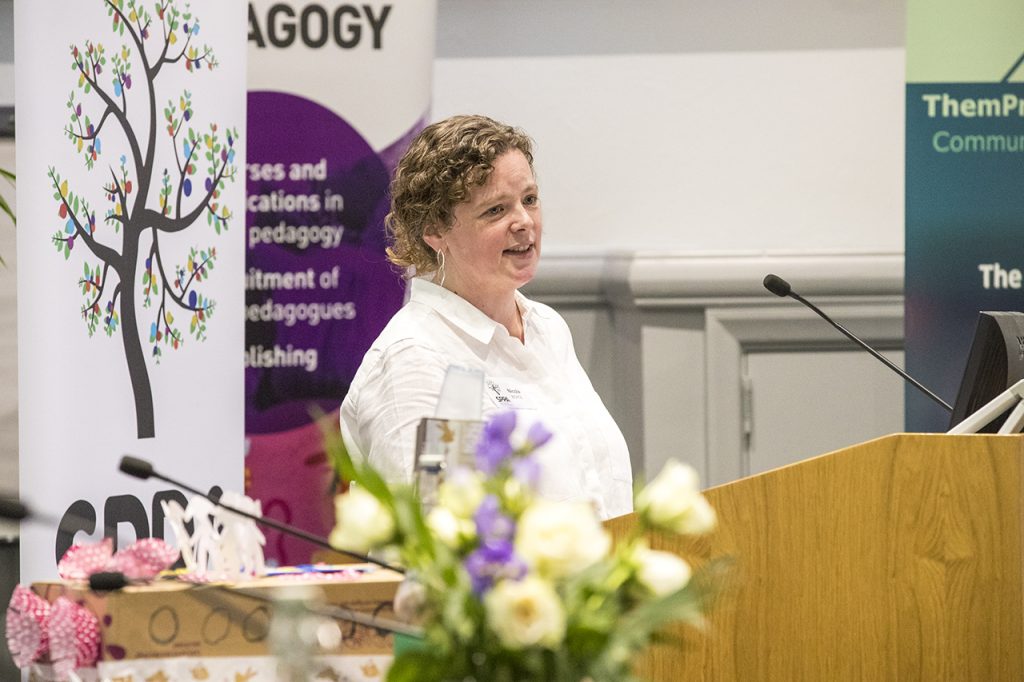
To end the day, Nicola Boyce gave a rousing keynote, highlighting the future direction of social pedagogy. She highlighted that social pedagogy in the UK has come a long way in the last 15 years, from interest in small academic circles to development in practice in scores of organisations working with children and adults, as well as the development of professional qualifications from vocational diplomas to post-graduate degrees. Nicola stated that much of this development has been dependent on pilot projects, including the ‘Head, Heart, and Hands’ fostering programme, and the inaugural SPPA conference. Where we go from here depends on how we continue to value and hold in creative tension the different aspects of social pedagogy, as a theoretical paradigm, as practice, as a professional education, an area of policy and research with its own unique orientation to the world, including critical political and cultural dimensions. To do this, we must individually and collectively empower ourselves to develop social pedagogy in our own areas of practice and how we continue to come together and recognise what we share in common, while learning from the differences between us and inspiring others to join in.
We are pleased to announce that we will be hosting our next SPPA Conference in Edinburgh, Scotland on 28th September 2018!
We would like to thank everyone who attended and participated at the SPPA Conference in London. Below is a short video of the event, and a glimpse of what to expect for the next one:
Workshops and Special Interest Groups (SIGs)
We ran a number of workshops and Special Interest Groups (SIGs) at the conference, which were running in parallel with other sessions. Our attendees had the option to sign up for some workshops and SIGs that were of interest to them, from Social Pedagogy in Refugee Camps to Learning, Creativity and more!
Below, we have a brief overview of each workshop and SIG.